
Research
We stand on the shoulders of giants.
The MeRT℠ approach is an innovative and targeted treatment based on powerful third party research that has been published in the most prestigious scientific journals. Below you will find the peer-reviewed and published research that builds the foundation of our approach to treatment of the brain.
Research that specifically supports MeRT

Trauma Monthly
Magnetic Resonance Therapy Improves Clinical Phenotype and EEG Alpha Power in Post-traumatic Stress Disorder
Why is this important? MeRT showed statistically significant improvements (p<0.001) in PTSD Checklist-Military (PCL-M) in pre and post treatment scores. This was corroborated by quantitative-EEG findings demonstrating increased global alpha band power (p=0.013) and delta band decrease (p=0.028). These data show trends towards normalization of EEG and concomitant clinical improvements using MeRT stimulation for PTSD.
Aerospace Medical Association
Magnetic E-Resonant therapy alleviates combat related post-traumatic stress disorder
Why is this important? MeRT℠ may be a promising adjunctive treatment to help veterans suffering from PTSD.
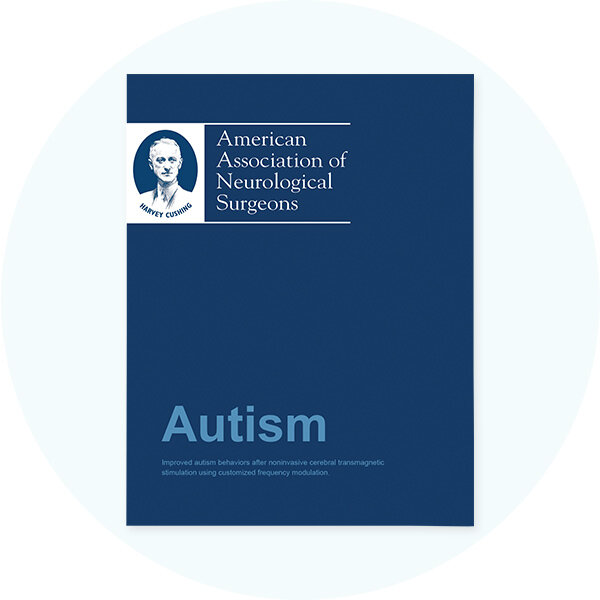
American Association of Neurological Surgeons
Improved autism behaviors after noninvasive cerebral trans-magnetic stimulation using customized frequency modulation: follow-up mean 24 months
Why is this important? A chart review of ASD patients receiving MeRT℠ was performed on 141 patients. Clinical improvement was noted in the majority of patients - Class I research data is necessary to confirm this data.

Austin Publishing Group
The Potential of Magnetic Resonant Therapy in Children with Autism Spectrum Disorder
Why is this important? MeRT℠ may be a therapeutic option to pursue given EEG abnormalities in children with ASD.
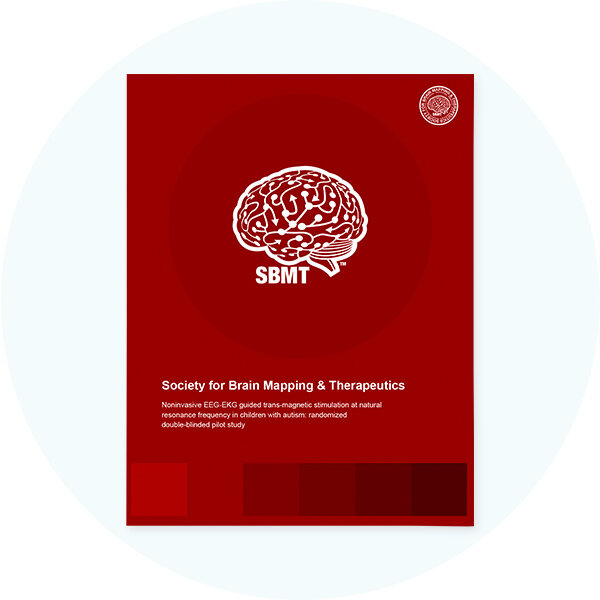
Society for Brain Mapping & Therapeutics
Noninvasive EEG-EKG guided trans-magnetic stimulation at natural resonance frequency in children with autism: randomized double-blinded pilot study
Why is this important? MeRT℠ may impart EEG and clinical changes in children with ASD, with more research necessary at this time.
EEG Support Documents

CellPress
The Speed of Alpha-Band Oscillations Predicts the Temporal Resolution of Visual Perception
Why is this important? Brainwave speed and specific function relates to processing speed.

Nature
EEG Analytics for Early Detection of Autism Spectrum Disorder: A data-driven approach
Why is this important? Brain mapping shows high predictability of Autism.

Dementia & Neuropsychologia
Traumatic brain injury An EEG point of view
Why is this important? Brain mapping shows general disruption in function in traumatic brain injury.
Neuromodulation Support Docs

Frontiers in Integrative Neuroscience
Repetitive transcranial magnetic stimulation affects behavior by biasing endogenous cortical oscillations
Why is this important? Brain Stimulation can affect function of stimulated brain tissue.

Current Biology
Rhythmic TMS Causes Local Entrainment of Natural Oscillatory Signatures
Why is this important? Brain Stimulation can affect function of stimulated brain tissue.

Frontiers in Systems Neuroscience
Making Waves in the Brain: What Are Oscillations, and Why Modulating Them Makes Sense for Brain Injury
Why is this important? Injury induced disruption of neuronal oscillations has profound impacts on neural connectivity & behavior. Changes in EEG can be used as a biomarker to confirm mild and moderate TBI.